
Introduction
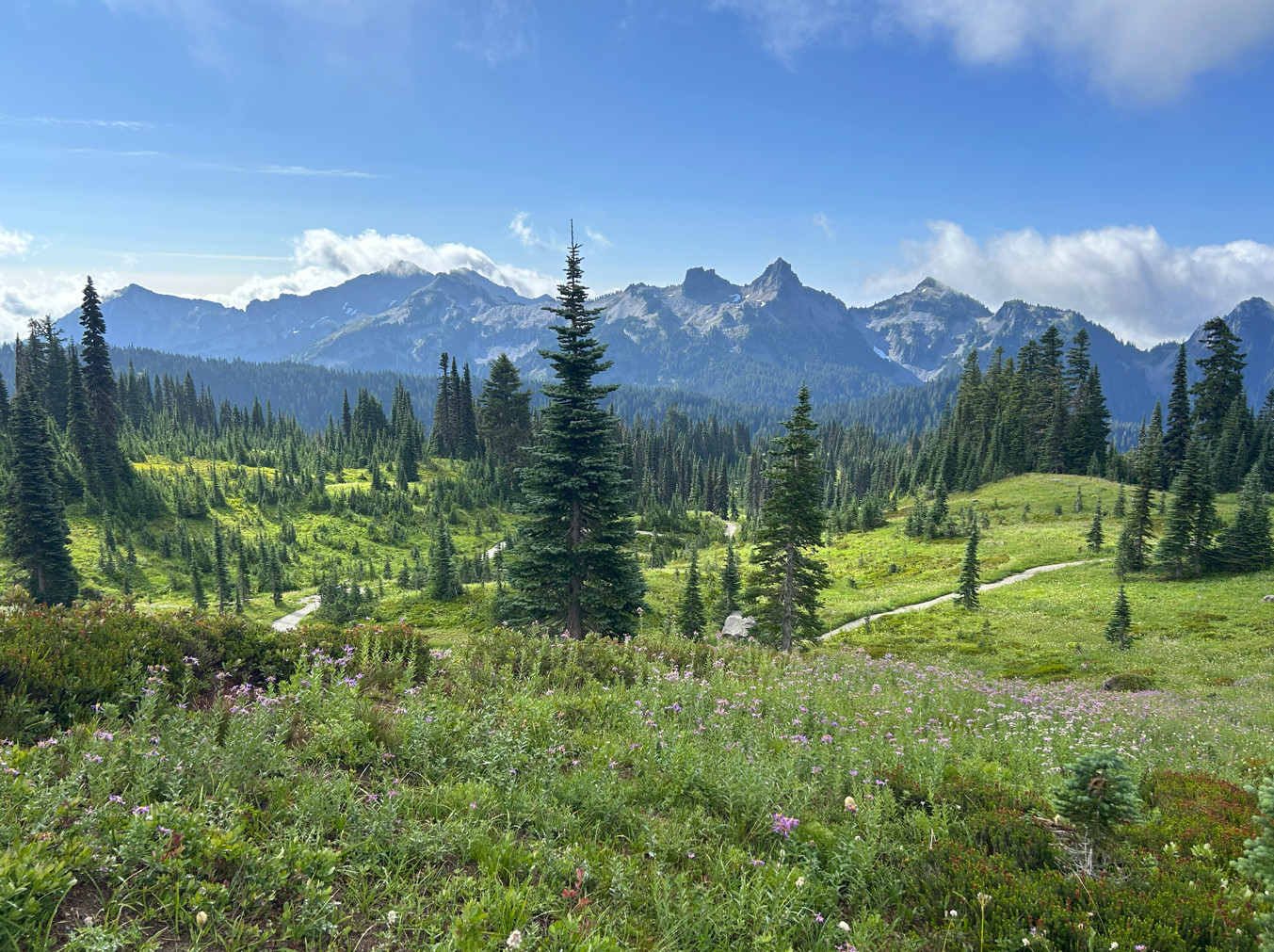
With towering peaks, glacier-carved valleys, and vibrant wildflower meadows, Mt. Rainier National Park is one of the most breathtaking destinations in the Pacific Northwest. This active volcano rises to 14,411 feet, dominating the Cascade Range and creating a landscape filled with waterfalls, alpine trails, and panoramic viewpoints.
Whether you’re visiting for a challenging hike, a scenic drive, or simply to admire the iconic wildflowers that bloom at 5,000+ feet, Mt. Rainier offers something unforgettable for every type of traveler.
This guide provides the ultimate 1-day Mt. Rainier itinerary, covering the two most iconic areas of the park—Paradise and Sunrise—along with the best hikes, scenic stops, and must-know tips for planning your day.
Table of Contents
- Introduction
- Table of Contents
- Preparing for your visit
- Best time to visit Mt. Rainier
- What to pack
- Reservations for Mt. Rainier
- The Perfect 1 Day Itinerary
- Overall
Preparing for your visit
Best time to visit Mt. Rainier
Mt. Rainier experiences all 4 seasons with the winter and spring being the least visited time of year. During the winter, areas like Paradise can experience high amounts of snowfall and road closures occur during this time of year.
Mid-July through mid-August tho is the best time to visit. During this short window:
- Mountain views are more likely to be clear
- Wildflowers peak in Paradise and Sunrise
- Snow has melted off most hiking trails
- Temperatures range from 60°F to 80°F
- Rainfall is at its lowest for the year
If you are able to choose what day to go to Mt. Rainier, try to choose a day that shows clear skies and warm weather. Weather in the pacific northwest (especially at Mt. Rainier) can change rapidly and clouds can tend to block views of the mountain. If you want the opportunity to see the mountain, plan ahead as best as you can.
What to Pack
Exploring Mt. Rainier makes for a special day. That being said, it’s important to have the right gear on hand so you are fully prepared! Below are the items we recommend for hiking and exploring the national park.
- Hiking boots – A good pair of hiking boots can be the difference between a fun hike or a miserable one. Make sure the boots are waterproof and comfortable.
- Rain Jacket – Weather at Mt. Rainier can change rapidly. A sunny day can quickly turn to windy and some scattered rain. It’s important to come prepared in case it happens. A rain jacket that also acts as a windbreaker is the perfect item to carry in case of sudden weather change.
- Water – It’s very important that you make sure you bring enough water on your hike. The visitors center has water filling stations, but it’s the only location to fill water bottles. We recommend having a Cammelbak with a built in bladder.
- Hiking Poles – This is more of a preference than a necessity. But, hiking polls definitely make the descent a little easier on the knees and help with balance.
- Camera – As I mentioned before, exploring Mt. Rainier is truly a special experience. Don’t forget your camera to capture the wildlife, meadows and backdrop of Mt. Rainier along the trails!
- Navigation Map and compass – It’s important to be prepared for anything. That being said, we recommend carrying the 10 essentials. This includes a navigation map and compass. Some trails are not clearly marked and having the right tools keeps you from getting lost.
- First Aid Kit – We recommend carrying a first aid kit to be prepared in case you need it.
- Sunscreen or sun protection – The higher in altitude you go, the more exposed you are to the sun. Pack some sunscreen to make sure the end doesn’t end with having to treat sunburn!
- Emergency Shelter – We hope you never need this! But, we still recommend packing it just in case. Since the weather can change here so rapidly, you will want to be prepared just in case.
Reservations for Mt. Rainier
To help preserve the fragile meadows and beauty of the park, a permit is required to enter between 7am and 3pm daily.
Paradise Corridor: May 24 – September 2, 2024
Sunrise Corridor: July 3 – September 2, 2024
This permit is an addition to the admission fee to enter the park. Permits cost about $2 and are available 90 days ahead of the scheduled visit date.
If you miss the window to purchase a permit in January, additional tickets are released at 7pm the day before you plan to explore the park. These are on a first come, first serve basis and the number of permits is limited.
To make sure you can get a permit last minute, we recommend doing the following:
- Go to Paradise or Sunset booking page about 15 minutes before 7pm.
- Sign into or create an account and keep the page open until 7pm.
- Refresh the page at 7pm and set the date for tomorrow. You should still be logged in which will save you time.
Permits can be purchased at the National Parks Service site for Mt. Rainier.
The Perfect 1-Day Mt. Rainier Itinerary
Stop 1: Entering Mt. Rainier National Park
Mt. Rainier has 4 entrances to reach different parts of the park. At each entrance you will need to present the permit for the area you are visiting and pay for admission to the park (unless you have the America the Beautiful National Park annual pass). The 4 entrances are
- Nisqually Entrance (southwest)
- Carbon River Entrance (northwest)
- Steven’s Canyon Entrance (southeast)
- White River Entrance (northeast).
For this itinerary, we recommend visiting through the Nisqually Entrance, Steven’s Canyon Entrance or the White River Entrance. All these entrances give you access to the Sunrise and Paradise Corridor.
Stop 2: Visiting Paradise at Mt. Rainier
Paradise is one of the most visited areas in Mt. Rainier National Park. With stunning, parking lot views of Mt. Rainier and the nearby peaks of the Cascades, Paradise is the perfect first stop on your journey though Mt. Rainier National Park. Visit the visitor center for a meal or drink. We suggest arriving before 9am since the parking lot for Paradise can fill up quickly.
Hiking in Paradise
Hiking in Paradise gives picturesque views of meadows, mountains and glaciers. Trails can vary in difficulty from strenuous to easy. Below are a few great options to hike during your time in Paradise:

Skyline Loop Trail
- Difficulty: Strenuous
- Time: 3 hr 30 mins
- Trail Length: 5.6 miles
- Elevation Gain: 1771 ft
The Skyline Loop Trail is one of the best and highest rated trail in Mt. Rainier. The trail begins from the Paradise parking lot and climbs to an elevation of 7000 ft. At the highest point of this hike is Panorama Point which provides sweeping views of the Cascade Mountains, including views of Mt. St. Helens and Mt. Hood in the distance. Depending on the weather, you will be able to see Mt. Rainier surrounded by wildflower filled meadows.
Alternate Trails:
Myrtle Falls Trail (Easy)
- Distance: 0.9 miles
- Time: 25 minutes
Myrtle Falls, located along the Skyline Loop Trail, provides beautiful views with a backdrop of Mt. Rainier. This trail is 0.9 miles and takes about 25 mins. It’s a nice, easy trail with just as beautiful views as the Skyline Loop Trail.

Glacier Vista Trail (Moderate)
- Distance: 2.8 miles
- Time: 1 hour 45 minutes
Glacier Vista Trail is a 2.8 mile, moderate loop that has beautiful views of Mt. Rainier and wildflower meadows. This hike takes about 1 hr 45 mins to complete and begins at the Paradise parking lot.
Stop 3: Narada Falls
A short drive from Paradise is Narada Falls. Located right off Paradise Valley Dr, park in the lot and head towards the trail head. After hiking down the short trail (0.2 mile), enjoy views of the 168 ft tall waterfall. During the winter time, this trail is snow covered and can be hazardous due to the steep descent so be careful if visiting this time of year.

Stop 4: Reflection Lake
After visiting Narada Falls, you will head back down Paradise Valley Rd to Reflection Lake. This crystal clear lake is stunning with backdrop views of Mt. Rainier. Enjoy the tranquility here or take a walk on the Lower Lakes Trail which is along the road next to the lake.

Stop 5: Visit Sunrise at Mt. Rainier
Sunrise is the next destination on the 1 day itinerary. At 6400 ft of elevation, this is the highest point you can reach by car. At the parking lot, you are greeted by breathtaking views of Mt. Rainier and Emmons Glacier. Sunrise requires a reservation so make sure you have one booked the day before.
Best Hikes in Sunrise
Mount Freemont Lookout Trail
- Difficulty: Moderate
- Time: 2 hr 45 mins
- Trail Length: 5.7 miles
- Elevation Gain: 1108 ft
This iconic trail has one of the best views of Mt. Rainier in Sunrise. The moderately difficult trail begins on the Sourdough Ridge Trail and continues to the viewpoint from there. Once you reach the viewpoint, you are greeted by stunning views of the valley below and the surrounding Casades. Its no wonder this is one of the most popular trails in the park!
Alternate Hikes
Frozen Lake via Sourdough Ridge Trail (Easy)
This 2.8 mile, easy trail is the beginning part of the Mount Freemont Lookout Trail. Though you will not receive the same 360 degree views like the Freemont Trail, you will still see stunning views of Mt Rainier and the Frozen Lake along the trail.
FAQ — Mt. Rainier National Park
How many days do you need for Mt. Rainier?
1 day is enough to see Paradise and Sunrise, but 2–3 days allows more hiking and exploration.
Do I need a 4×4 vehicle for Mt. Rainier?
No. Any standard car is fine during summer months.
Can you see Rainier without hiking?
Yes—Paradise and Sunrise have incredible views right from the parking areas.
Is July or August better for wildflowers?
Late July to early August is peak bloom.
Overall
Mt. Rainier National Park is one of the most extraordinary landscapes in the Pacific Northwest. With wildflower meadows, glacier views, forested valleys, and iconic hikes, it’s no surprise this national park is a favorite of travelers from around the world.
Whether you spend the day hiking the Skyline Loop Trail, catching reflections at Reflection Lake, or soaking in the views from Sunrise, this 1-day Mt. Rainier itinerary ensures you’ll experience the very best of the park.
Take in the views, capture the memories, and enjoy one of the most stunning destinations in the United States—you won’t soon forget it.