
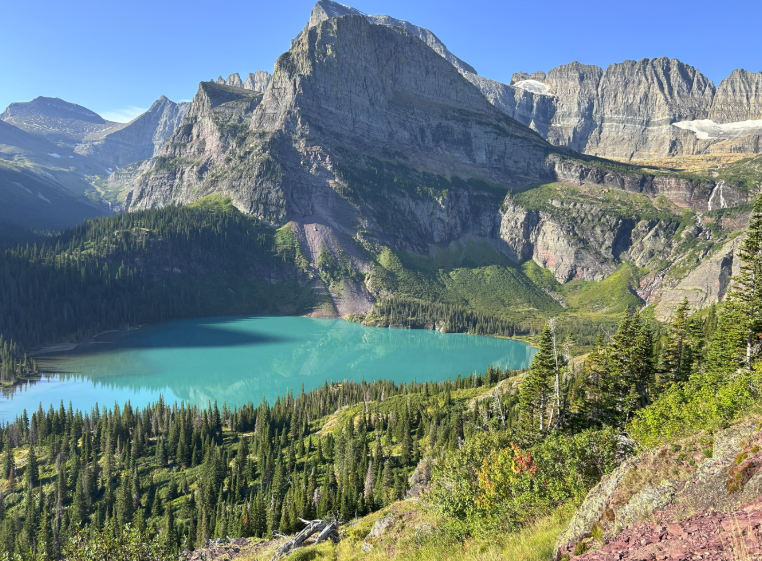
Lying in the northwestern corner of Montana is the “Crown of the Continent”, Glacier National Park. Regarded by many as one of the most beautiful national parks, Glacier leaves you in awe and stunned by the immense size and beauty it has to offer.
With varying landscapes including vast mountain ranges, turquoise colored lakes, abundant wildlife, and ancient glaciers, Glacier National Park has so much to offer to anyone enjoying a visit. Among these sites are all kinds of activities including hiking, camping, swimming, and stargazing.
One question that is always asked when deciding to visit the park is “how much time should I plan to spend here?” The answer to that question can vary, but to see every inch of the park, we would recommend about a week. But, if you only have a weekend to visit the park, let Mikey Maps give you the perfect itinerary to enjoy everything Glacier National Park has to offer!
Table of Contents
- Preparing for your visit
- What to pack
- Reservations for Glacier National Park
- Where to stay
- Glacier Day 1
- Glacier Day 2
- Overall
Preparing for your visit
Best time to visit Glacier National Park
The best time to visit Glacier is July thru September. One of Glacier’s most popular attractions, the Going-To-The-Sun-Road, is just opening up from the winter months in July. The road stays open until mid October, but this can be affected by possible snow in September. July to August is the peak tourist season for Glacier due to the mostly clear skies and warm weather. Temperatures typically range in July and August from a high of mid 80F during the day to low of mid 40F at night.
September is another good time to visit if you are looking for cooler weather. Weather typically this time of year cools off to a high of mid 70F during the day and a low of 40F at night. September also has a possibility of the Going-To-The-Sun-Road still being open as long as it is not affected by snow.
Staying Safe in Glacier National Park
Glacier National Park is unique in the abundant wildlife that inhabits the park. One of the most important animals to be aware of are the species of bears that call the park home.
Grizzly Bear
Visually distinguished by a large hump on their upper back, short rounded ears, and large 4 inch claws, these large predators are very common to Glacier. With about 300 known bears inhabiting the park, there is a good possibility of running into one.
Black Bear
Visually distinguished by a longer snout, pointy ears, and lack of shoulder hump, these bears are also very common to Glacier. With around 600 known bears in the park, there is a good possibility of running into them as well.
Though bear encounters do occur in Glacier, the odds of a fatal attack are very low. There have only been 10 fatal encounters since 1967 which is very low considering the number of millions that visit each year.
That being said, it’s important to practice bear safety when hiking in the park. Here are a view ways to keep yourself safe when hiking in bear country:
- Make noise while hiking – To help prevent a surprise encounter, try to have a conversation or make noise by clapping or hitting hiking poles together. This will let the bear know you are walking towards them and likely scare them off.
- Carry Bear Spray – This is the number one, best way to deter a bear that approaches you. It’s the best way to keep you safe if a bear does get too close for comfort.
- Pay attention to surroundings – It’s important when hiking in bear country to pay attention to your surroundings. Some encounters have occurred with bears just grazing in meadows.
- Do Not Run – Running from a large predator can trigger a chase response. It’s best to stay calm, grab your bear spray and slowly walk away from the bear while keeping your eyes on it.
- Keep your distance – If you do see a bear, never approach it. These are predatory animals and if they feel threatened, they will defend themselves. The distance usually recommend for wildlife is:
- Non-predatory (Moose, marmots, squirrels, etc): 25 yards
- Predatory (Bears, Mountain Lions, etc): 75 yards
What to Pack
Though Glacier National Park has a good amount of amenities for those visiting the park, it’s important to have the right gear on hand so you are fully prepared! Below are the items we recommend for hiking and exploring the national park.
Bear Spray
This is a MUST if you are hiking in Glacier National Park. With over 900 known bears in Glacier, it is common to run into a bear along any hike. Bear spray is the best way to protect yourself in case of any encounter. It’s very important that you practice and know how to properly use bear spray. Here’s some recommendations on what bear spray we recommend purchasing. If you wish to rent, Glacier Outfitters offers rentals inside the park near Lake McDonald.
Hiking Boots
A good pair of hiking boots can be the difference between a fun hike or a miserable one. Make sure the boots are waterproof and comfortable.
Warm Jacket
Weather at Glacier even during the summer months can be unpredictable. Random snow storms are not uncommon even during peak season. Mornings in Glacier can usually be chilly so having an extra layer will keep you comfortable.
Water
Having extra water is critical in Glacier. On most trails, there is no where to fill empty water bottles and with temperatures reaching mid 80F, having extra water is important for your safety. We recommend packing at least 4 liters of water per person to avoid the risk of running out.
Hiking Poles
This is more of a preference than a necessity. But, hiking polls definitely make the descent a little easier on the knees and help with balance. They also act as a great way to make sounds if hiking in bear country.
Camera
Exploring Glacier is truly a special experience. Don’t forget your camera to capture some of the most iconic photos you will ever have!
Navigation Map and compass
It’s important to be prepared for anything. That being said, we recommend carrying the 10 essentials. This includes a navigation map and compass. Most of the trails are well marked but service in Glacier is mostly non-existent so come prepared to avoid possibly getting lost.
First Aid Kit
We recommend carrying a first aid kit to be prepared in case you need it.
Sunscreen or sun protection
The higher in altitude you go, the more exposed you are to the sun. Pack some sunscreen to make sure the end doesn’t end with having to treat sunburn!
Reservations for Glacier
During the peak season, Glacier National Park requires a vehicle reservation to enter through any of the 3 entrances: Going to the Sun Road, Many Glacier and North Fork. Below are the time of year that requires a reservation:
May 24 – September 8: Vehicle reservations required for the west side of Going-to-the-Sun Road and North Fork
July 1 – September 8: Vehicle reservations required for Many Glacier
The vehicle reservation is a separate admission fee from the general admission to the park and needs to be booked in advance. If you do not have a vehicle reservation pass before visiting, you won’t be able to enter the park between 6am and 3pm. If you plan to go to the park before 6am or after 3pm, you will not need to register your vehicle.
A portion of the available reservations are released for purchase 120 days in advance of your trip by visiting Glacier Vehicle Reservation. The remaining reservations are released on the day before your visit at 7pm MST.
The number of available reservations are very limited. These reservations can sell out in less than 5 minutes (Many Glacier usually sells out faster due to less reservations being available). It’s important to follow these steps for the Next Day reservation if you are booking the day before your planned arrival.
- Go to Going to the Sun Road, Many Glacier or North Fork booking page about 15 minutes before 7pm MST. If you plan to book multiple reservations, have someone help you by logging in separately.
- Sign into or create an account and keep the page open until 7pm.
- Refresh the page at 7pm and set the date for tomorrow. You should still be logged in which will save you time.
Where to Stay Nearby
Columbia Falls
This Airbnb is where we stayed during our visit! This gorgeous stay in downtown Columbia Falls comes with a fully stocked kitchen, gym and is walking distance to several restaurants. With only a 20 minute drive to Glacier – Going to the Sun Road entrance, it’s a perfect location to stay when visiting the park.
Many Glacier
Many Glacier Hotel – Inside the Park (expedia.com)
Many Glacier Hotel is located right along Swiftcurrent Lake inside Glacier National Park. The stay includes access to the Many Glacier section of the park among many other amenities. There is limited or zero cell phone reception here but wifi is available to all guests.
Babbs
If you aren’t looking for a luxury hotel, there are plenty of Airbnb’s over in Babbs. Located on the east side of Glacier National Park, this is an ideal area to stay if you plan to visit the Many Glacier area multiple times and you don’t want to stay in Many Glacier.
Glacier Day 1
Entering through Going to the Sun Road
For the first day in Glacier National Park, we recommend visiting the Going to the Sun Road and driving up to Logan Pass. This engineering marvel climbs to an elevation of 6,646 feet to Logan Pass, which is the highest point to reach by car in the park. While driving up the Going to the Sun Road, you will be mesmerized by stunning views of the valley and mountain of Glacier National Park. There are several pull off points along the way where you can get out and take pictures of some of the highest peaks in the park such as Heavens Peak.
The entire drive to Logan Pass from the entrance is about 1 hour. We highly recommend getting to Logan Pass no later than 7am if you are driving. The parking lot fills up quick and once it is full, it’s very difficult to find an available spot.
There are shuttles that run on the East and West side of Logan Pass if you do not wish to drive up the Going to the Sun Road. These shuttles start running in July and continue through Labor Day (first weekend in September). These shuttles however fill up very quickly and can be late due to traffic on the Going to the Sun Road. It’s best to get to the shuttle early to avoid having to wait. Below is the shuttle schedule:
East Side (Apgar Visitor Center to Logan Pass): 8am to 7pm
West Side (St Mary to Logan Pass): 7am to 7pm
If you plan to drive and arrive after 7am, we recommend parking at any of the shuttle stops where available. From there, you can take the shuttle up to Logan Pass to begin the day.
Hiking the Hidden Lake Trail
Difficulty: Moderate
Time: 3 hours
Trail Length: 5.1 miles
Elevation Gain: 1338 ft

The Hidden Lake Trail is one of the most popular trails in Glacier National Park. Beginning from the Logan Pass Visitor Center, this trail starts on a boardwalk and quickly climbs in elevation. After climbing to the end of the boardwalk, you will be greeted with stunning views of the surrounding mountains and valleys, as well as the towering presence of Clements Mountain.

Continue along the path until you reach the overlook for Hidden Lake. The breathtaking views of the deep blue lake surrounded by snow capped mountains provides one of the most picturesque views in the park.

After enjoying the views, you can continue down the trail to the lake, or head back to the parking lot.
While on this trail, keep a look out for wildlife. People have spotted several animals here including bighorn sheep, bears, marmots and more. If you see anything, remember to observe from a safe distance.


Alternate Hike:
Granite Park Chalet via Highline and Granite Park Trail
Difficulty: Strenuous
Time: 6 hours
Trail Length: 11.4 miles
Elevation Gain: 1400 ft
The Highline Trail is another popular hike from Logan Pass. This point to point hike follows the Going to the Sun Road, but up on the mountain slope. The narrow walkway gives stunning views of the valley and mountains in Glacier National Park. But, if you are afraid of heights we don’t recommend this trail.
At the end of the Highline Trail at Granite Park Chalet, you merge on the Granite Park Trail to the end point on the Going to the Sun Road.
From there, you can pick up the shuttle to bring you back to your car at either Logan Pass or the Apgar Visitor Center.
Jackson Glacier Lookout
The next stop from Logan Pass is the Jackson Glacier Overlook. From Going to the Sun Road, get off at the parking lot for the Jackson Glacier. From the parking lot, you will be able to see the slowly melting Glacier high up in the mountains.
Add Jackson Glacier Photo Here
St. Mary’s and Virginia Falls
Difficulty: Moderate
Time: 1 hr 30 mins
Trail Length: 3.1 miles
Elevation Gain: 452 ft
This beautiful waterfall trail is the next stop after visiting the Jackson Glacier Overlook. From the Going to the Sun Road you will get off at the St. Mary’s Falls parking lot. From there, you can see the waterfall you are hiking towards in the distance to the left.
Throughout the trail you can enjoy fields of wildflowers and backdrops of the mountains. At about the halfway point is St. Mary’s Falls. The 2 tiered waterfall provides the perfect picture, with views of the forest above it and the clear, blue water.
At the end of the trail, you will find the beautiful Virginia Falls. This 50 ft tall waterfall is the product of snow melt, giving it blue water and a beautiful view.
Glacier Day 2
Hike to Grinnell Glacier Viewpoint
Difficulty: Hard
Time: 6 hours
Trail Length: 10.6 miles
Elevation Gain: 2596 ft

Starting from the Many Glacier Hotel, this 10.6 mile out and back trail is one of the best hikes you can do in Glacier National Park. We recommend starting this hike by 7am to make sure you find parking and avoid the heat.
Access to Many Glacier requires a vehicle registration that needs to be purchased the day before. If you are staying west of the park (Such as Columbia Falls), you may need to purchase a Going to the Sun Road vehicle registration as well (unless you plan to arrive before 6am).
This is due to the Going to the Sun Road is the shorter drive to Many Glacier. The alternative is to drive east around the park which adds another 50 miles.
Once you arrive at Many Glacier Hotel, park in the main parking lot and begin the hike. The hike starts at Swiftcurrent Lake and then proceeds up to the main trail.
Bear sightings are not uncommon on this trail, so make sure you pack Bear Spray and never hike alone.


The views on this trail are among the most stunning in Glacier National Park. The alpine lakes with mountain backdrops is truely breathtaking.

Throughout the hike, you will find fields of colorful wildflowers and roaring waterfalls. It really has the perfect mix of everything you could ask for in a hike!

Once you reach the top of the hike, you will find a stunning, turquoise blue lake and the Grinnell Glacier. Take some time at the top to rest, enjoy the view and take in the surrounding area. You may even see some wildlife such as bighorn sheep and mountain goats!

Hike Avalanche Lake
Difficulty: Moderate
Time: 2.5 hours
Trail Length: 5.9 miles
Elevation Gain: 757 ft
The Avalanche Lake Trail is located off the Going to the Sun Road near Lake McDonald. This 5.9 mile hike starts off at the Trail of the Cedars. After walking through the tree grove, you will begin the climb to Avalanche Lake.


The alpine lake is very picturesque with mountain backdrops and waterfalls. Take some time to take in the views and even take a quick swim!
Overall
Glacier National Park is truly a marvel for us to enjoy! No matter how much time you have to spend at Glacier, you will leave with memories that will last a lifetime!